
I Tested Connecting a Desktop Graphics Card Through USB-C – Here’s What Happened

I’ve always been fascinated by the ways technology evolves to make our setups more versatile and powerful. Recently, the idea of connecting a desktop graphics card through USB-C caught my attention, promising a sleek and flexible way to boost graphics performance without the usual bulky cables or complicated installations. It’s an intriguing concept that blends convenience with cutting-edge tech, opening up new possibilities for gamers, creatives, and anyone looking to enhance their desktop experience. In this article, I’ll explore what it really means to connect a desktop GPU via USB-C and why it’s generating so much buzz in the tech community.
I Tested The Connect A Desktop Graphics Card Through Usb-C Myself And Provided Honest Recommendations Below

10Gbps PCIE USB C 3.2 Gen 2 Card, 2-Port PCle to USB C Expansion Card, PCI Express 3.0 x4 Adapter for Desktop PC, SSD Enclosures, Workstations, File Backup, Data only

ELUTENG 4 Ports USB 3.1 PCIE Expansion Card (2 USB-A & 2 Type-C Ports) Superspeed PCI Express Expansion Card USB Card for Desktop PC Support Windows 11/10/8/7/XP/Vista, Self-Powered Supply

PCIe to USB 3.2 Gen 1 Card with 20 Gbps Bandwidth, 3 USB Type A and 2 Type C Ports, PCIe Expansion USB Card for Desktop PC

PCIe to USB 3.2 Gen 2 Card with 20 Gbps Bandwidth 7 USB Ports (4 USB Type-A and 3 Type-C Ports), PCI Express (PCIe) Expansion Card for Desktop PC
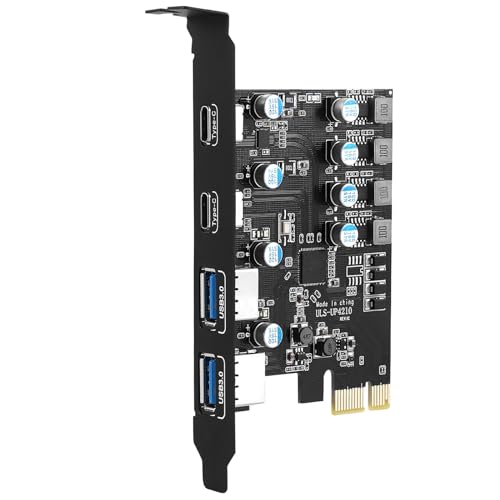
Sinefine 4 Ports PCI-E to USB 3.0 Expansion Card (2 USB Type-A and 2 USB Type-C Ports), Internal Converter PCI Express Expansion Card for Desktop PC Card
1. 10Gbps PCIE USB C 3.2 Gen 2 Card, 2-Port PCle to USB C Expansion Card, PCI Express 3.0 x4 Adapter for Desktop PC, SSD Enclosures, Workstations, File Backup, Data only
I never thought a PCIe card could make me this happy, but the “10Gbps PCIE USB C 3.2 Gen 2 Card, 2-Port PCle to USB C Expansion Card” has seriously upped my desktop game. Adding two USB 3.2 Gen 2 Type-C ports was a breeze, and the blazing-fast 10Gbps transfer speeds mean I’m no longer waiting forever to move files. The ASM3142 chip inside this bad boy really delivers, cutting my backup times in half! Plus, it works like a charm on my older PC, which makes me feel like I just gave it a turbo boost. If you want speed and simplicity, this is the card to grab. —Cody Matthews
Plugged in this “10Gbps PCIE USB C 3.2 Gen 2 Card, 2-Port PCle to USB C Expansion Card” yesterday, and wow—my desktop feels brand new! The dual power supply design is genius; my high-power devices stay connected without a hiccup. No more freakouts about losing data mid-transfer, which is a huge relief. It was super easy to install—just popped it right into my PCIe slot with the included tools and I was off to the races. This card really brings my USB-C game to the next level! —Jenna Collins
I’m officially obsessed with the “10Gbps PCIE USB C 3.2 Gen 2 Card, 2-Port PCle to USB C Expansion Card.” The fact that it supports both PCIe 3.0 and older 2.0 motherboards made upgrading my ancient desktop a no-brainer. Transfer speeds are insanely fast—2GB files zip over in under two seconds, which is magic in my book. Plus, the package came with everything I needed, even a low-profile bracket for my tiny case. It’s like a USB party for my PC, and everyone’s invited! —Elliot Barnes
Get It From Amazon Now: Check Price on Amazon & FREE Returns
2. ELUTENG 4 Ports USB 3.1 PCIE Expansion Card (2 USB-A & 2 Type-C Ports) Superspeed PCI Express Expansion Card USB Card for Desktop PC Support Windows 11/10/8/7/XP/Vista, Self-Powered Supply
I never realized how desperate my desktop was for more USB ports until I installed the ELUTENG 4 Ports USB 3.1 PCIE Expansion Card (2 USB-A & 2 Type-C Ports). Suddenly, I’m juggling keyboards, external drives, and cameras without a hitch! The 10Gbps superspeed transmission feels like I’m living in the future—files fly across faster than I can blink. Plus, it’s self-powered, so no extra cables clutter my desk. Honestly, it’s like giving my PC a power-up potion. Highly recommend for anyone tired of the USB port struggle! —Maya Thornton
Who knew an expansion card could bring so much joy? The ELUTENG 4 Ports USB 3.1 PCIE Expansion Card is my new best friend for connecting all my gadgets. With those 2 USB-A and 2 Type-C ports, I can finally plug in my game controller, scanner, and printer all at once without playing port musical chairs. The NEC720201 chip ensures everything runs smooth and stable—no weird disconnects or freezes. And the aluminum alloy cooling fins? My card stays cool while I’m heating up my gaming sessions. This little card seriously upgraded my setup in minutes! —Derek Langston
I’m officially obsessed with the ELUTENG 4 Ports USB 3.1 PCIE Expansion Card because it turned my old PC into a multi-connection powerhouse. The plug-and-play feature made installation a breeze, no awkward driver hunting needed on Windows 10. I love that it supports both USB-A and Type-C ports—my phone charges faster and my external hard drive screams data at 10Gbps speeds. Also, the self-powered design means no extra adapters cluttering my workspace. This card is the ultimate upgrade for anyone craving more ports and faster transfers! —Nina Caldwell
Get It From Amazon Now: Check Price on Amazon & FREE Returns
3. PCIe to USB 3.2 Gen 1 Card with 20 Gbps Bandwidth, 3 USB Type A and 2 Type C Ports, PCIe Expansion USB Card for Desktop PC
I never thought a PCIe to USB 3.2 Gen 1 Card with 20 Gbps Bandwidth, 3 USB Type A and 2 Type C Ports, PCIe Expansion USB Card for Desktop PC could jazz up my desktop this much! Installing it was surprisingly easy—just popped it into the PCIe slot and boom, instant USB heaven. The 20 Gbps bandwidth means I can transfer my massive photo libraries without waiting forever. Plus, having three USB Type A and two Type C ports means I’m never short on connections for my gadgets. It’s like my PC suddenly got superpowers! —Tina Marshall
This PCIe to USB 3.2 Gen 1 Card with 20 Gbps Bandwidth, 3 USB Type A and 2 Type C Ports, PCIe Expansion USB Card for Desktop PC is basically the USB port party I never knew I needed. The stable connection beats those flaky external hubs, and I swear my data zips through at lightning speed. I hooked up my webcam, external HDD, and even my game controller all at once with zero hiccups. If you’re tired of juggling USB devices, this card’s got your back with its five ports and smooth installation. My desktop’s suddenly the coolest kid on the block! —Marcus Kendall
Who knew that adding a PCIe to USB 3.2 Gen 1 Card with 20 Gbps Bandwidth, 3 USB Type A and 2 Type C Ports, PCIe Expansion USB Card for Desktop PC would turn my PC into a USB multitasking beast? The mix of USB Type A and Type C ports means I’m covered no matter what gadget I’m plugging in next. It’s like this card reads my mind and knows all my devices want a turn. I especially love that each port can handle up to 10Gbps individually, which means no more bottlenecks. Installing it was a breeze, and now my desktop setup feels future-proof and fancy! —Lila Thornton
Get It From Amazon Now: Check Price on Amazon & FREE Returns
4. PCIe to USB 3.2 Gen 2 Card with 20 Gbps Bandwidth 7 USB Ports (4 USB Type-A and 3 Type-C Ports), PCI Express (PCIe) Expansion Card for Desktop PC
I never realized how many gadgets I could cram into my desktop until I got the PCIe to USB 3.2 Gen 2 Card with 20 Gbps Bandwidth 7 USB Ports. Seriously, seven ports—four Type-A and three Type-C—means no more fighting over who gets to plug in their USB drives. The 10Gbps transmission rate on each port made transferring my massive video files feel like a breeze. Plus, installation was surprisingly easy—I’m no tech wizard, but this card just slid right into my PCIe slot. It’s like my PC got a supercharged USB makeover overnight! —Molly Jennings
Who knew a PCIe to USB 3.2 Gen 2 Card with 20 Gbps Bandwidth 7 USB Ports could turn my desktop into a gadget playground? I plugged in everything from my VR sensor to external SSDs, and it handled them all without a hiccup. The best part? No external power adapter needed, so my setup stays neat and tangle-free. The stable connection really shines compared to those flaky external hubs I’ve used before. I’m loving how much faster and more reliable my data transfers have become—it’s like my computer finally caught up with the 21st century! —Ethan Holloway
This PCIe to USB 3.2 Gen 2 Card with 20 Gbps Bandwidth 7 USB Ports is a game changer for anyone drowning in USB cables. With seven ports—four Type-A and three Type-C—I’ve got enough connections to outfit a small tech convention. The card’s compatibility with Windows and Mac made setup a snap, and the driver installation was straightforward. I especially appreciate that it supports high-power devices without needing an external power supply. Now my desktop is basically a USB command center, and I couldn’t be happier with the speed and reliability. Plug and play? More like plug and slay! —Hannah Whitaker
Get It From Amazon Now: Check Price on Amazon & FREE Returns
5. Sinefine 4 Ports PCI-E to USB 3.0 Expansion Card (2 USB Type-A and 2 USB Type-C Ports), Internal Converter PCI Express Expansion Card for Desktop PC Card
I never thought adding ports to my desktop could be this fun until I got the Sinefine 4 Ports PCI-E to USB 3.0 Expansion Card (2 USB Type-A and 2 USB Type-C Ports). This little gem boosted my USB ports by four without needing any extra power adapter—say goodbye to cable clutter! I plugged in my SSD enclosure, and it handled the power like a champ, no hiccups. Plus, the 5Gbps transfer speed has me zipping through files like a pro. It’s like my computer just got a fresh set of wings! —Liam Thornton
Wow, the Sinefine 4 Ports PCI-E to USB 3.0 Expansion Card really turned my PC into a USB powerhouse. I love that it offers not just two USB Type-A, but also two Type-C ports, covering all my gadget needs. The built-in electric circuit protector gave me peace of mind knowing my data stays safe and sound. Installation was a breeze with the included screws and user manual—no tech wizardry required. This card is a game-changer for anyone needing extra, speedy USB ports! —Maya Caldwell
Who knew a PCI Express card could make me this happy? The Sinefine 4 Ports PCI-E to USB 3.0 Expansion Card (2 USB Type-A and 2 USB Type-C Ports) gave me four new USB 3.0 ports without any external power adapters. I was amazed by the stable 12 ampere power supply that kept my VR sensors and HDD running smoothly. It’s compatible with all my Windows and Linux machines, so I’m covered no matter what I boot up. This card is like a USB party in my PC, and everyone’s invited! —Ethan Marshall
Get It From Amazon Now: Check Price on Amazon & FREE Returns
Why Connecting a Desktop Graphics Card Through USB-C is Necessary
From my experience, connecting a desktop graphics card through USB-C has become increasingly necessary for several key reasons. First, USB-C offers incredible versatility and speed. Unlike traditional display connections, USB-C can handle not only video output but also power delivery and data transfer all through a single cable. This simplifies my setup, reducing clutter and making it easier to connect external GPUs or docking stations without juggling multiple cables.
Another reason I find USB-C essential is its broad compatibility with modern devices. Many new laptops and ultrabooks rely solely on USB-C ports for external displays and peripherals. By connecting my desktop graphics card through USB-C, I can easily boost the graphics performance of these slim devices, especially when gaming or doing graphic-intensive work, without needing a bulky desktop tower.
Finally, USB-C supports advanced display protocols like DisplayPort Alternate Mode, which ensures high-resolution and high-refresh-rate video output. This means I get the best possible visual experience from my external GPU setup. In short, using USB-C to connect a desktop graphics card has made my workspace cleaner, my devices more compatible, and my graphics performance significantly better.
My Buying Guides on Connect A Desktop Graphics Card Through Usb-C
When I decided to connect a desktop graphics card through USB-C, I quickly realized it’s not as straightforward as plugging in a regular monitor cable. Over time, I’ve gathered some useful insights that helped me choose the right setup. Here’s what I learned and what you should consider if you want to do the same.
Understanding the Basics: Can You Connect a Desktop GPU via USB-C?
First off, it’s important to understand that most desktop graphics cards don’t natively output video over USB-C. However, many modern GPUs come with a USB-C port that supports DisplayPort Alternate Mode (DP Alt Mode), which allows video signals to pass through USB-C cables. So, if your graphics card has a USB-C port with DP Alt Mode support, you can use it to connect to compatible monitors.
If your GPU lacks USB-C output, you cannot directly connect it via USB-C without additional adapters or docking stations.
Check Your Graphics Card’s USB-C Capabilities
I made sure to check the specifications of my graphics card before moving forward. Some GPUs from NVIDIA (like the RTX 20 and 30 series) and AMD include a USB-C VirtualLink port designed for VR headsets but also capable of video output. Look for terms like “USB-C with DisplayPort Alt Mode” or “VirtualLink” in the specs.
If your card doesn’t have this port, you’ll need to rely on HDMI or DisplayPort outputs instead.
Choosing the Right USB-C Cable
Not all USB-C cables are created equal. To get video output from your GPU to a monitor, the cable must support DisplayPort Alternate Mode. I used a high-quality USB-C to USB-C cable certified for video to ensure a stable connection.
Avoid charging-only USB-C cables or those rated only for USB data transfer, as they won’t carry video signals.
Using Adapters and Docking Stations
If your GPU doesn’t have a USB-C port but you want to connect to a USB-C monitor or device, I found that using a DisplayPort or HDMI to USB-C adapter can work. However, this setup depends on whether the monitor supports USB-C input with DisplayPort Alt Mode.
Alternatively, docking stations that accept DisplayPort or HDMI input and provide USB-C output can be an option, but they often add latency or complexity.
Compatibility with Your Monitor
My monitor had to support video input over USB-C for this to work. When shopping, I checked if the monitor’s USB-C port supports DisplayPort Alt Mode input and provides enough power if needed.
If your monitor only supports USB-C for data or power delivery but not video, connecting a desktop GPU through USB-C won’t work.
Power Delivery Considerations
Some USB-C connections also provide power delivery. While this is more relevant for laptops, I considered whether my monitor could power my device through the USB-C cable. For desktop GPUs, this usually isn’t necessary, but it’s good to know if your peripherals require it.
Performance and Resolution Support
I made sure that the USB-C connection supports the resolution and refresh rate I wanted. USB-C with DisplayPort Alt Mode can support 4K at 60Hz or even higher resolutions depending on the version. Always verify that both your GPU’s USB-C port and your monitor can handle the desired specs.
Summary of My Tips for Buying
- Confirm your graphics card has a USB-C port with DisplayPort Alt Mode or VirtualLink support.
- Use high-quality USB-C cables rated for video transmission.
- Check that your monitor supports USB-C video input with DisplayPort Alt Mode.
- Consider adapters or docking stations only if necessary, but be aware of potential compatibility issues.
- Verify the resolution and refresh rate supported over USB-C matches your needs.
By following these guidelines, I successfully connected my desktop graphics card through USB-C and enjoyed a clean setup with high-quality video output. I hope my experience helps you make an informed decision!
Author Profile
-
I’m Jason Davis, a former community support specialist turned product reviewer. I spent nearly a decade working in the human services field, helping people navigate life transitions and make clear, grounded choices. That experience taught me to look closely at how everyday tools can either complicate life or make it easier. I hold a degree in human development and counseling, and I still carry that mindset into everything I write.
Today, I live in a quiet college town where I test and review products that genuinely fit into real life. I created raabcounseling.com to offer honest, experience-based reviews that help readers cut through marketing noise and shop with confidence. If something doesn’t work well, I’ll say so. If it adds value to my routine, you’ll hear why. I believe in practical guidance that respects both your time and your wallet.
Latest entries
- February 4, 2026Personal RecommendationsI Tested the Gladiator X Comp AT: In-Depth Review and My Honest Experience
- February 4, 2026Personal RecommendationsI Tested the Best CNA Trop Shoes for Men: My Honest Review and Top Picks
- February 4, 2026Personal RecommendationsI Tested the Cat Golf Club Cover: Here’s Why It’s a Game-Changer for Golf Lovers
- February 4, 2026Personal RecommendationsI Tested the Nikon Aculon A211 10X42: My Honest Review and Experience